Name of the Activity: Visit to RBI Museum, Kolkata Category of the Activity: Extension Programme Organising unit: Department of Economics Date: 18th February 2026 Time: 10:30 a.m. to 1:00 p.m. No. of Participants: 15 students and 5 faculty members
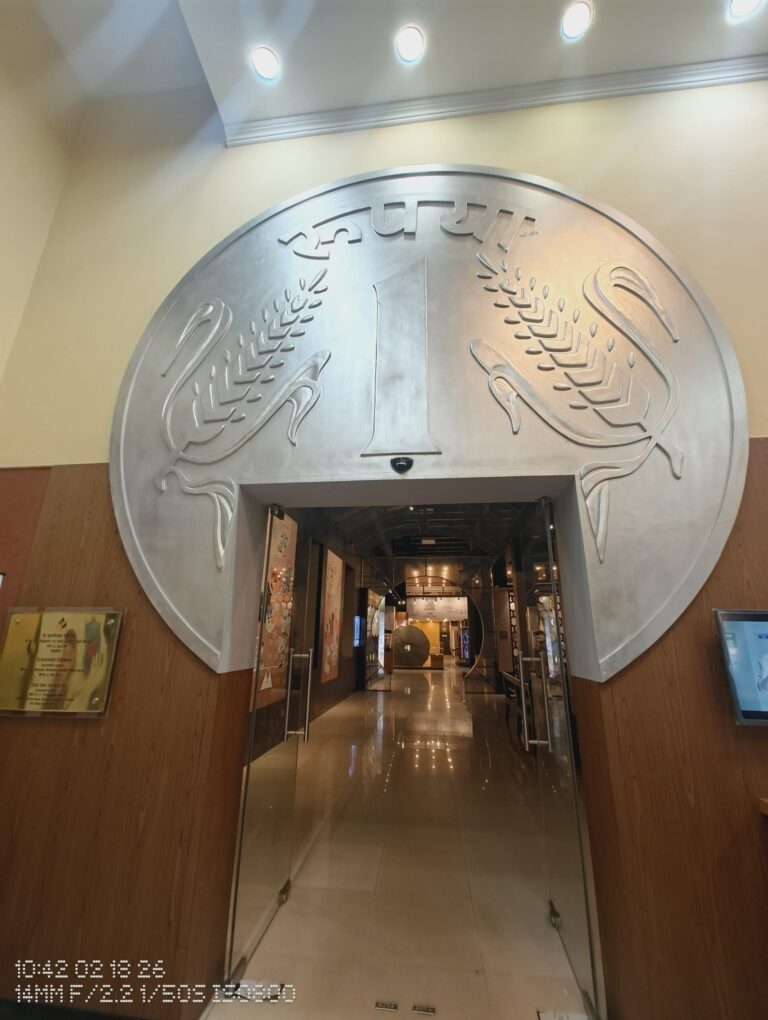
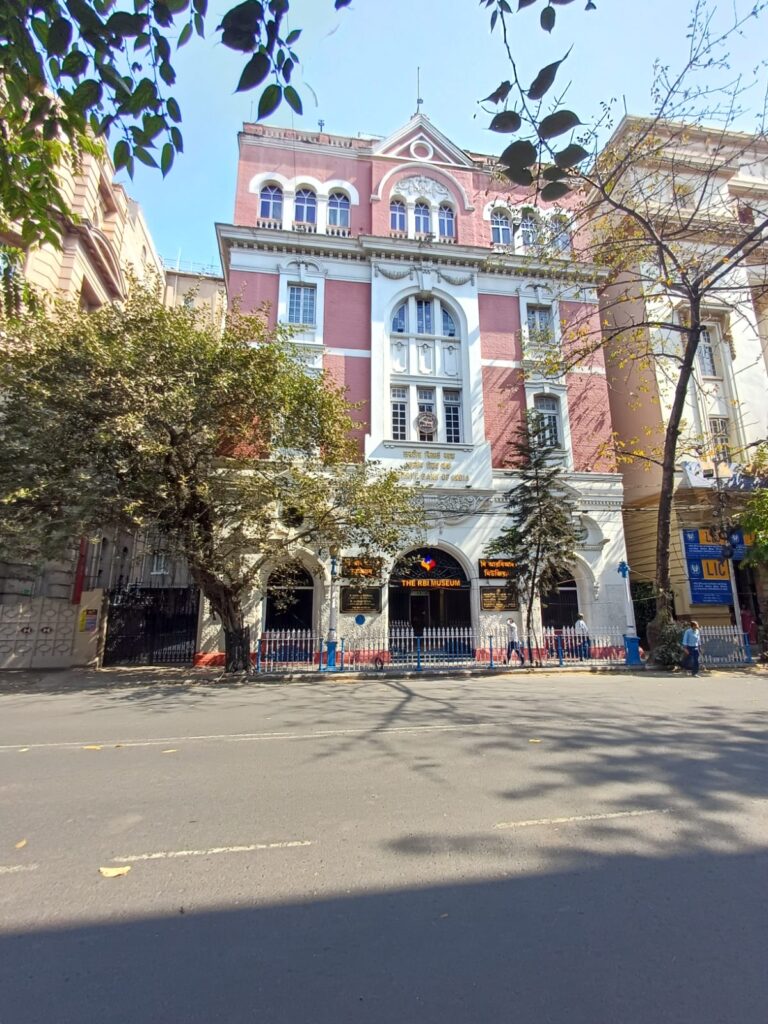
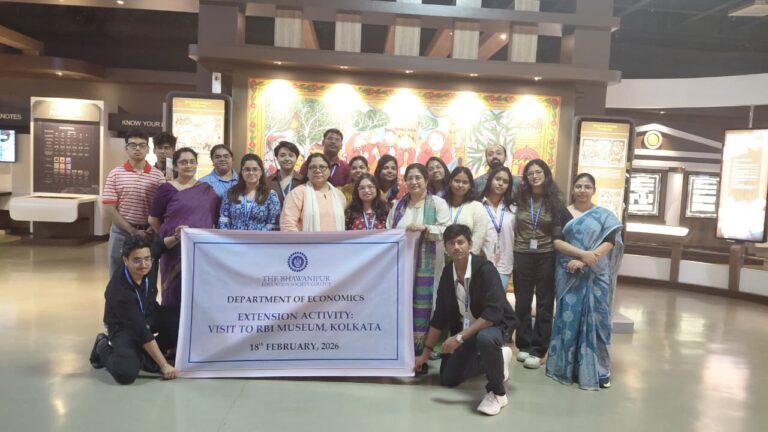
The Department of Economics organized an educational visit to the Reserve Bank of India Museum, Kolkata, on 18th February 2026. On that day, fifteen semester 1 students of the department, along with five faculty members were offered an enriching insight into India’s monetary framework. The visit began at the symbolic ₹1 coin-shaped entrance of the museum. Then an official of the museum expounded on a brief history of India’s central bank – the Reserve Bank of India. He told the group about the core functions of the RBI, how it maintains price stability in the economy, regulates money supply, and promotes economic growth.
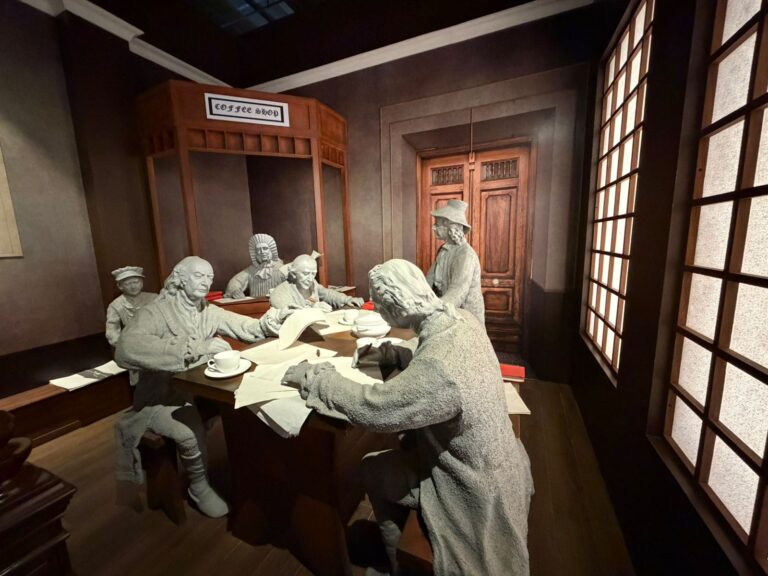
The museum exhibits traced the evolution of money over the centuries and the group got introduced to how coin sizes have reduced over time in India due to rising metal costs. Rare high-denomination and commemorative coins, reflecting India’s numismatic heritage, were also on display. A striking exhibit was a bundle of ₹10 notes worth one crore rupees. On display were machines used for note-punching and bond processing, along with UV lamps that detect counterfeit currency.
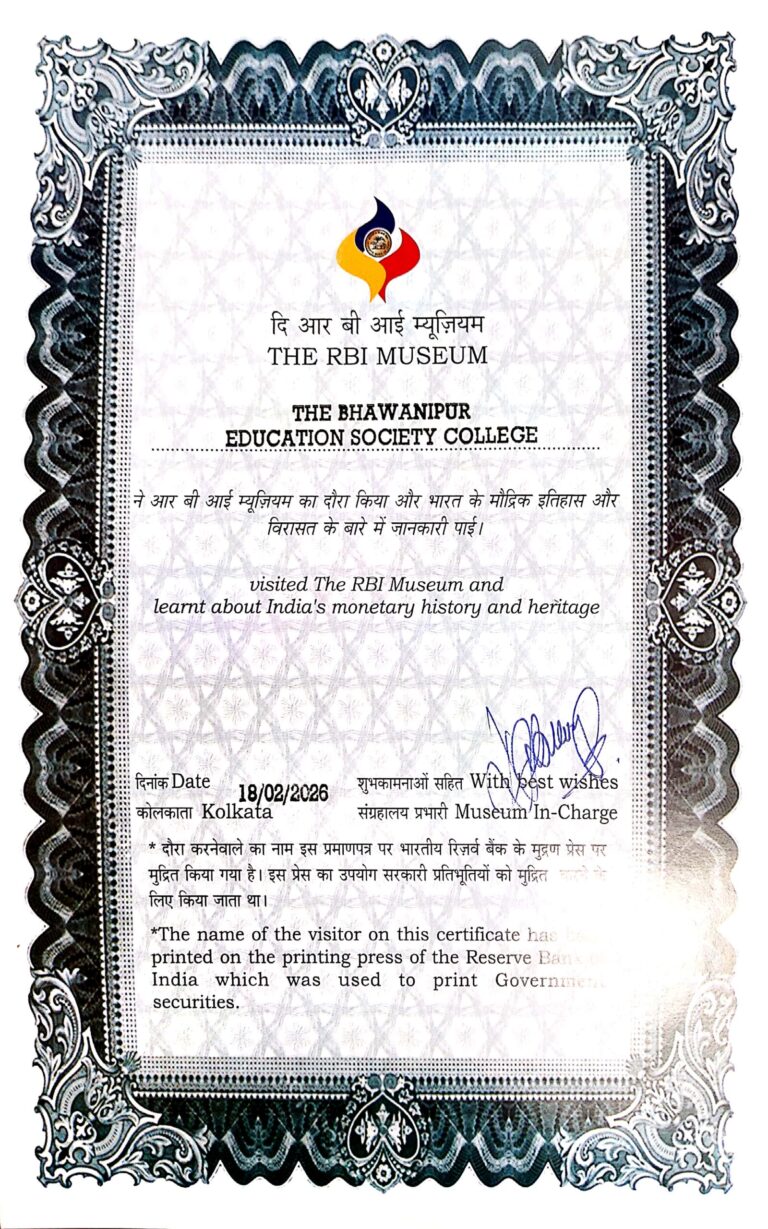
Among various displays at the two storied museum, the gold reserves section was particularly fascinating. A visitor to the museum can actually experience the weight of a standard 12.5 kg gold bar – as they get to raise a replica gold bar with one hand. The group learned that Indian households collectively hold tens of thousands of tonnes of gold, while the RBI holds over 800 tonnes as part of its official reserves. The visit seamlessly connected theory with practice, deepening the groups’ understanding of monetary economics in a dynamic and engaging manner. At the end of the visit, the museum authorities printed a certificate that mentions that students from The Bhawanipur Education Society College visited the museum on 18th February 2026. The certificate was printed on the central bank’s bond printing machine.
Any government’s domestic economic policy revolves round its fiscal policies and monetary policy. The central bank of a country is the primary architect of its monetary policy. The visit to the RBI Museum, Kolkata provided the students an insight into some of the instruments that guide the monetary policy of a nation and how those policies impact the country’s welfare and its socio-economic dynamics.
Report prepared by: Ananya Gupta, Shambhavi Mishra, Zuveria Naaz (Semester 1, Department of Economics)
“What you wear is how you present yourself to the world, especially today when human contacts go so fast. Fashion is instant language.” – Miuccia Prada. Fashion is something you own, it shows how to carry yourself, how confident you are in your skin and how well you carry the outfit …
HOW TO DO WELL IN B.COM A seminar was organised on 29th August at 6th floor, Concept Hall to enlighten students on the Secrets of Preparation, Suggestions & Achieving Success in B.com. This seminar was attended by over 300 students. The student co-ordinator of this seminar was Vinay Gupta.
The Bhawanipur Education Society College organized a Seminar on “How to be Healthy and Stress Free!” on the 20th of March 2015 at the college 2nd floor auditorium.
Controlling the emotions of a room, making the audience cry, laugh, fall in love with something you have created is not less of an art. Scriptwriting, acting, dancing, singing all are a part of the same. On the 4th and 6th of December 2021, the Enact Collective of The Bhawanipur College hosted Theater auditions. The …
Visit to the RBI Museum, Kolkata
Name of the Activity: Visit to RBI Museum, Kolkata
Category of the Activity: Extension Programme
Organising unit: Department of Economics
Date: 18th February 2026
Time: 10:30 a.m. to 1:00 p.m.
No. of Participants: 15 students and 5 faculty members
The Department of Economics organized an educational visit to the Reserve Bank of India Museum, Kolkata, on 18th February 2026. On that day, fifteen semester 1 students of the department, along with five faculty members were offered an enriching insight into India’s monetary framework. The visit began at the symbolic ₹1 coin-shaped entrance of the museum. Then an official of the museum expounded on a brief history of India’s central bank – the Reserve Bank of India. He told the group about the core functions of the RBI, how it maintains price stability in the economy, regulates money supply, and promotes economic growth.
The museum exhibits traced the evolution of money over the centuries and the group got introduced to how coin sizes have reduced over time in India due to rising metal costs. Rare high-denomination and commemorative coins, reflecting India’s numismatic heritage, were also on display. A striking exhibit was a bundle of ₹10 notes worth one crore rupees. On display were machines used for note-punching and bond processing, along with UV lamps that detect counterfeit currency.
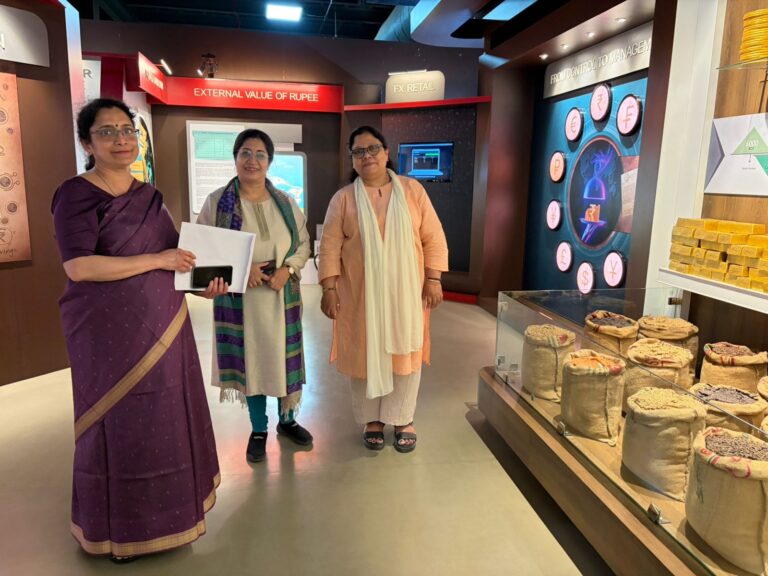
Among various displays at the two storied museum, the gold reserves section was particularly fascinating. A visitor to the museum can actually experience the weight of a standard 12.5 kg gold bar – as they get to raise a replica gold bar with one hand. The group learned that Indian households collectively hold tens of thousands of tonnes of gold, while the RBI holds over 800 tonnes as part of its official reserves. The visit seamlessly connected theory with practice, deepening the groups’ understanding of monetary economics in a dynamic and engaging manner. At the end of the visit, the museum authorities printed a certificate that mentions that students from The Bhawanipur Education Society College visited the museum on 18th February 2026. The certificate was printed on the central bank’s bond printing machine.
Any government’s domestic economic policy revolves round its fiscal policies and monetary policy. The central bank of a country is the primary architect of its monetary policy. The visit to the RBI Museum, Kolkata provided the students an insight into some of the instruments that guide the monetary policy of a nation and how those policies impact the country’s welfare and its socio-economic dynamics.
Report prepared by:
Ananya Gupta, Shambhavi Mishra, Zuveria Naaz
(Semester 1, Department of Economics)
Related Posts
Mr & Miss Ilmaisu Auditions
“What you wear is how you present yourself to the world, especially today when human contacts go so fast. Fashion is instant language.” – Miuccia Prada. Fashion is something you own, it shows how to carry yourself, how confident you are in your skin and how well you carry the outfit …
How to do well in B.com
HOW TO DO WELL IN B.COM A seminar was organised on 29th August at 6th floor, Concept Hall to enlighten students on the Secrets of Preparation, Suggestions & Achieving Success in B.com. This seminar was attended by over 300 students. The student co-ordinator of this seminar was Vinay Gupta.
Seminar on ‘How To Be Healthy and Stress Free’
The Bhawanipur Education Society College organized a Seminar on “How to be Healthy and Stress Free!” on the 20th of March 2015 at the college 2nd floor auditorium.
Theater Auditions
Controlling the emotions of a room, making the audience cry, laugh, fall in love with something you have created is not less of an art. Scriptwriting, acting, dancing, singing all are a part of the same. On the 4th and 6th of December 2021, the Enact Collective of The Bhawanipur College hosted Theater auditions. The …